
Watering
Getting the timing right — The most common way to kill a houseplant is too much love — which usually means too much water. Here's how to tell what your plant actually needs.
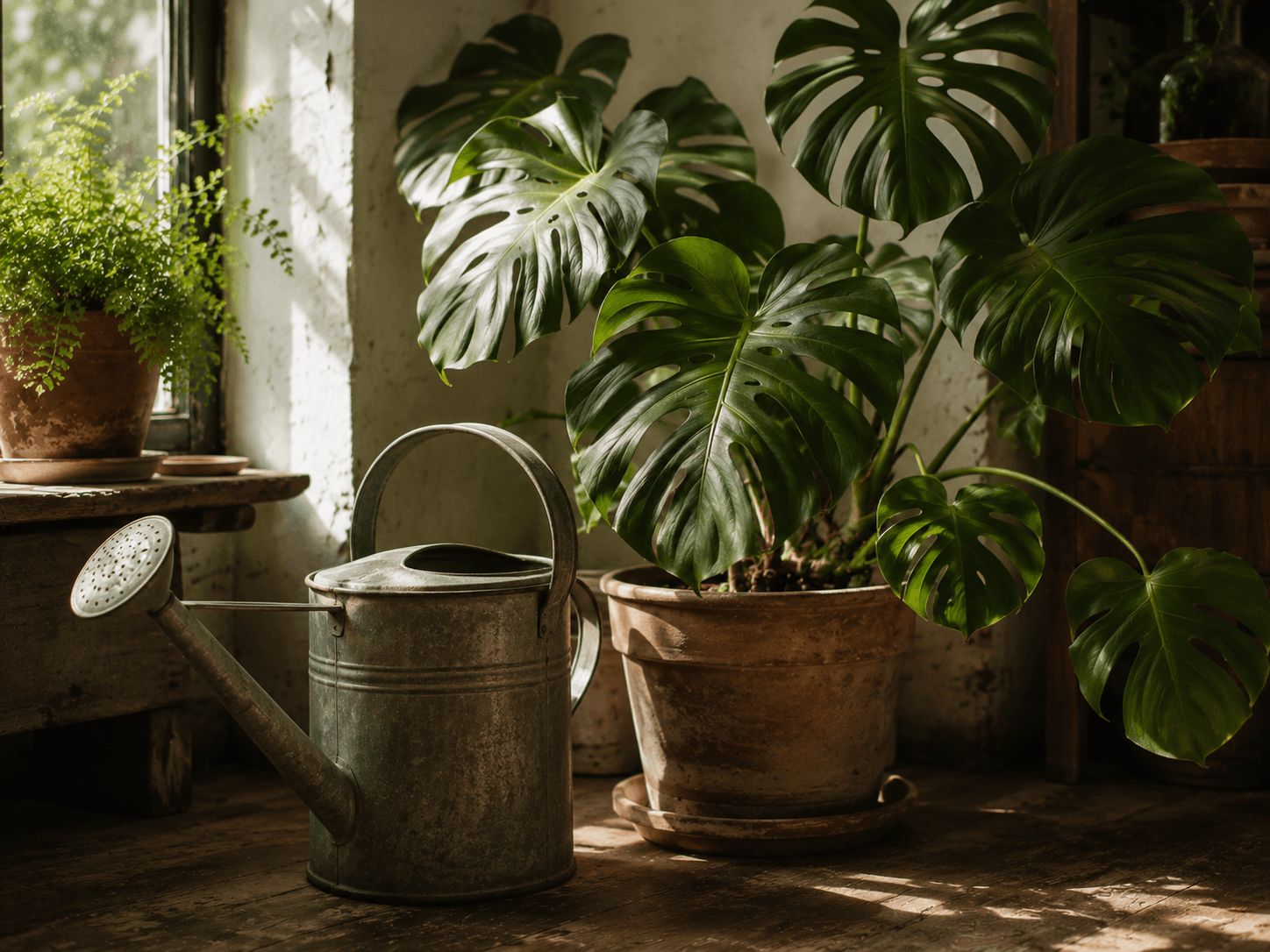
The finger test
Push your finger an inch into the soil. If it comes back damp, wait. If it comes back dry or just faintly cool, water. That's it. Everything else is refinement.
Moisture meters and apps can be useful, but they're no more reliable than the finger test for most plants. Your hands are the best tool you have.
How much and how often
Water until it drains freely from the bottom, then stop. Don't let the pot sit in standing water — tip it out after twenty minutes.
The frequency depends more on your home than any fixed rule. How warm it is, how much light the plant gets, whether the pot is terracotta or plastic. Most houseplants in a UK home in summer need watering roughly once a week; in winter, far less. Check rather than schedule.
Overwatering looks like underwatering
Yellow leaves and a limp stem are often taken as signs the plant needs water. Usually it's the opposite. Overwatered roots go slimy and can't absorb anything — so the plant wilts despite sitting in soggy soil.
When in doubt, unpot and look. Healthy roots are white or tan and firm. Rotten roots are brown, mushy, and smell unpleasant. If you find them, trim off the damaged parts, let the roots air dry for an hour, then repot into fresh dry compost.
Tap water is fine
Most houseplants tolerate tap water without complaint. If yours is very hard and you're growing something fussy — orchids, carnivorous plants — letting the water sit overnight allows some chlorine to off-gas, and the temperature comes up to room temperature, which roots prefer.
For the average monstera or pothos, the tap is fine. Don't let perfect be the enemy of done.