Six to twelve at a sitting, depending on how the throwing goes. Stoneware clay, earthy glazes, each one slightly different to the last. That's not a flaw — it's the whole point.
From raw clay to finished pot, each one passes through the same slow stages. There are no shortcuts worth taking.
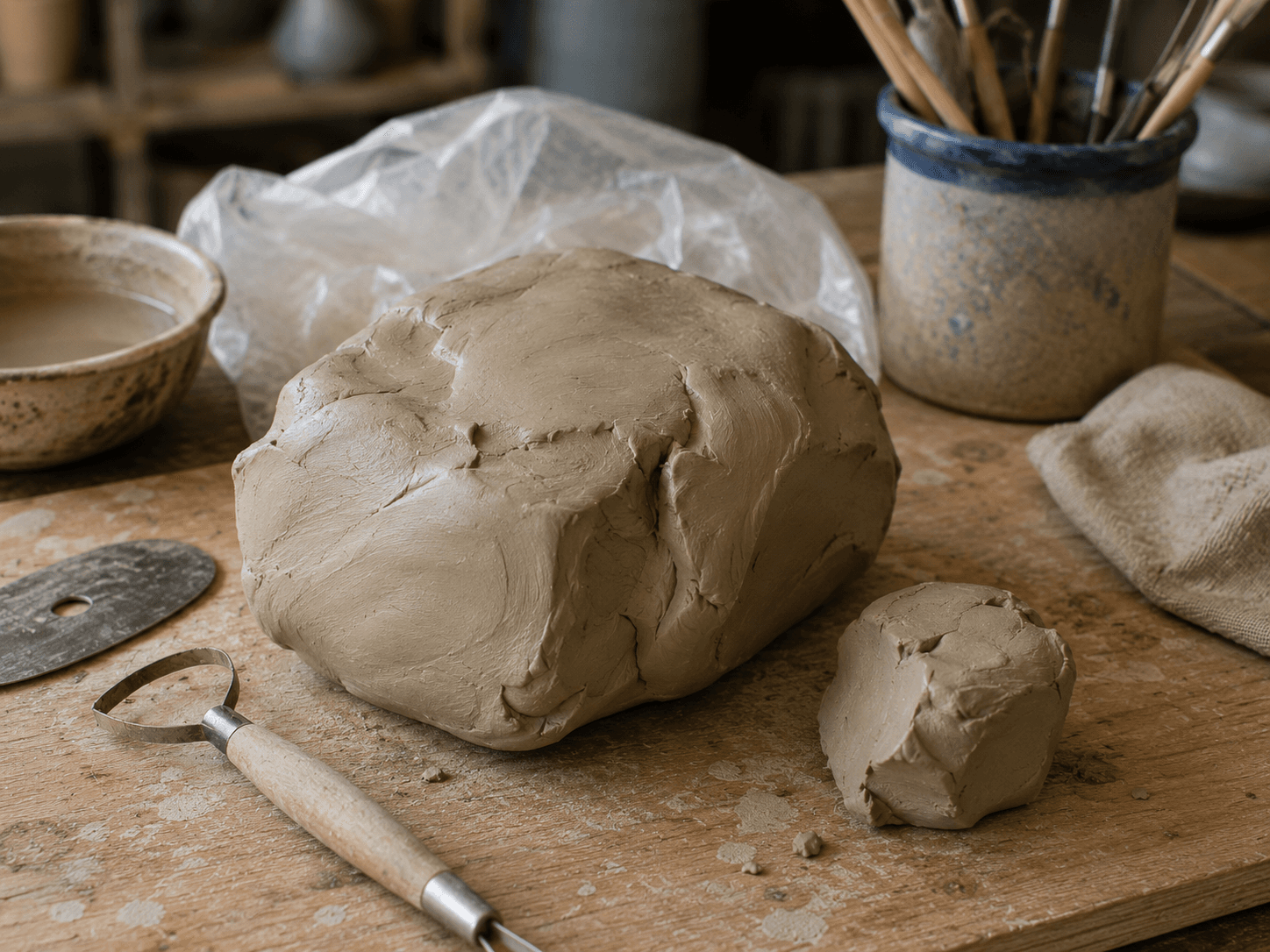
We use a speckled stoneware body — mid-firing, with a fine grog that gives each pot a bit of tooth. It's sourced from a UK ceramics supplier and mixed to a recipe refined over several years. The speckle comes through most clearly on unglazed areas and gives each pot its characteristic surface texture.
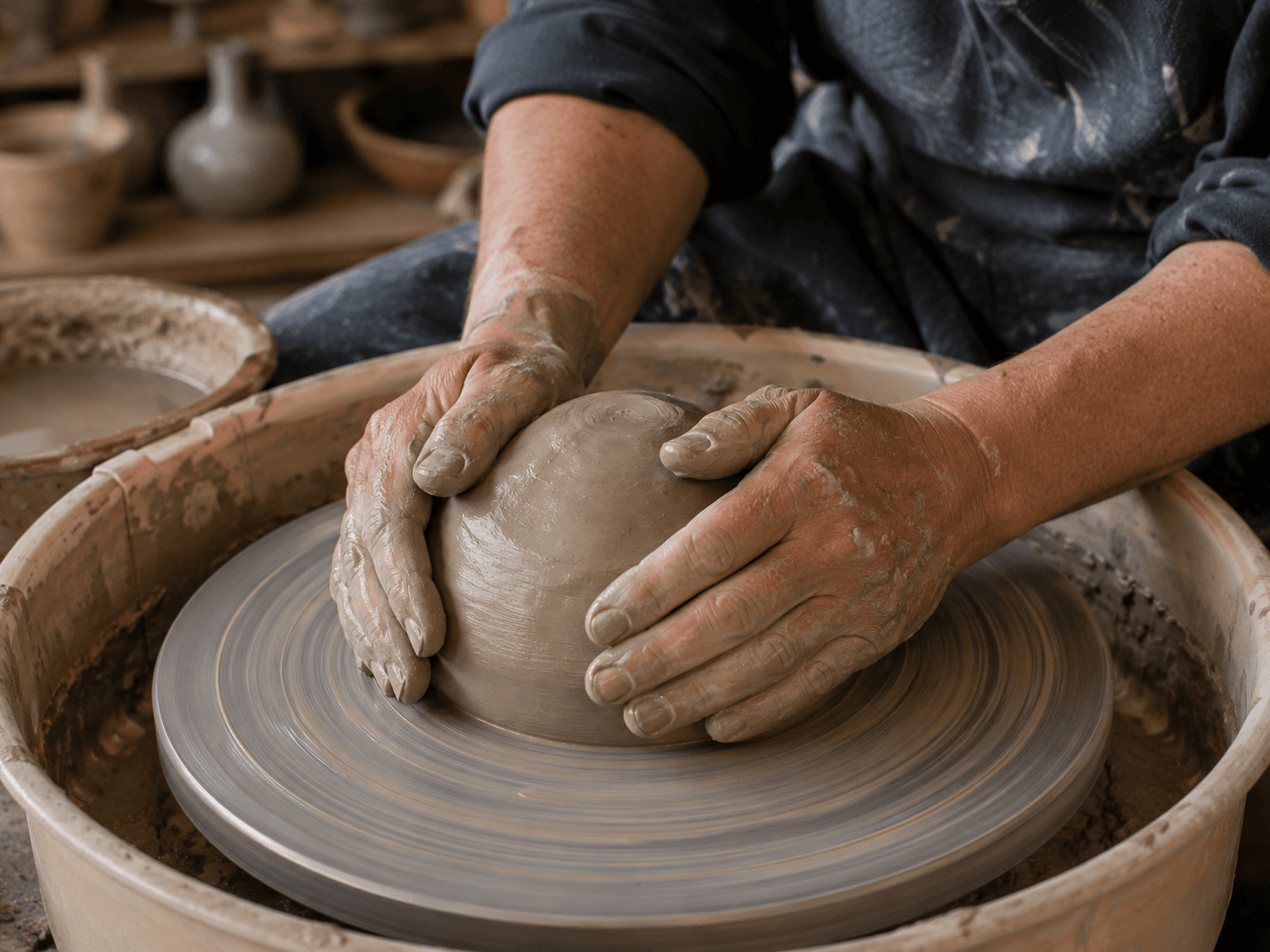
Each pot is thrown by hand. Six to twelve at a sitting, depending on how the throwing goes — some days everything centres easily, some days it doesn't. Throwing by hand means each pot carries small variations in wall thickness and profile: things a mould can't replicate and that become more visible once the glaze fires.
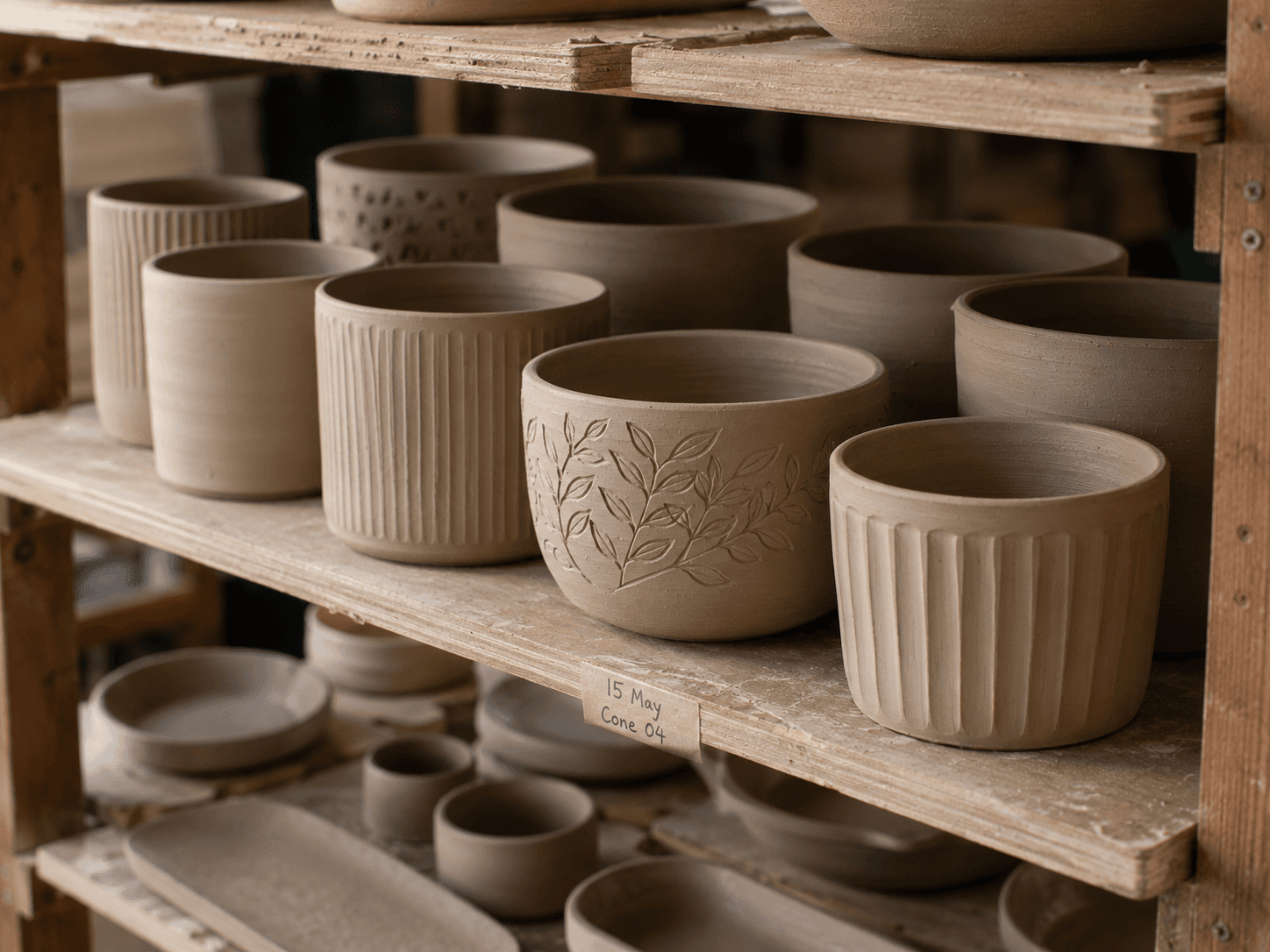
Freshly thrown pots are covered loosely and left to dry slowly — too fast and they crack. Once leather-hard, they go back on the wheel to be trimmed: the foot ring is cut, the walls are evened out, and the final form is decided. The trimmed foot is a small signature of hand-thrown work that most people never notice.
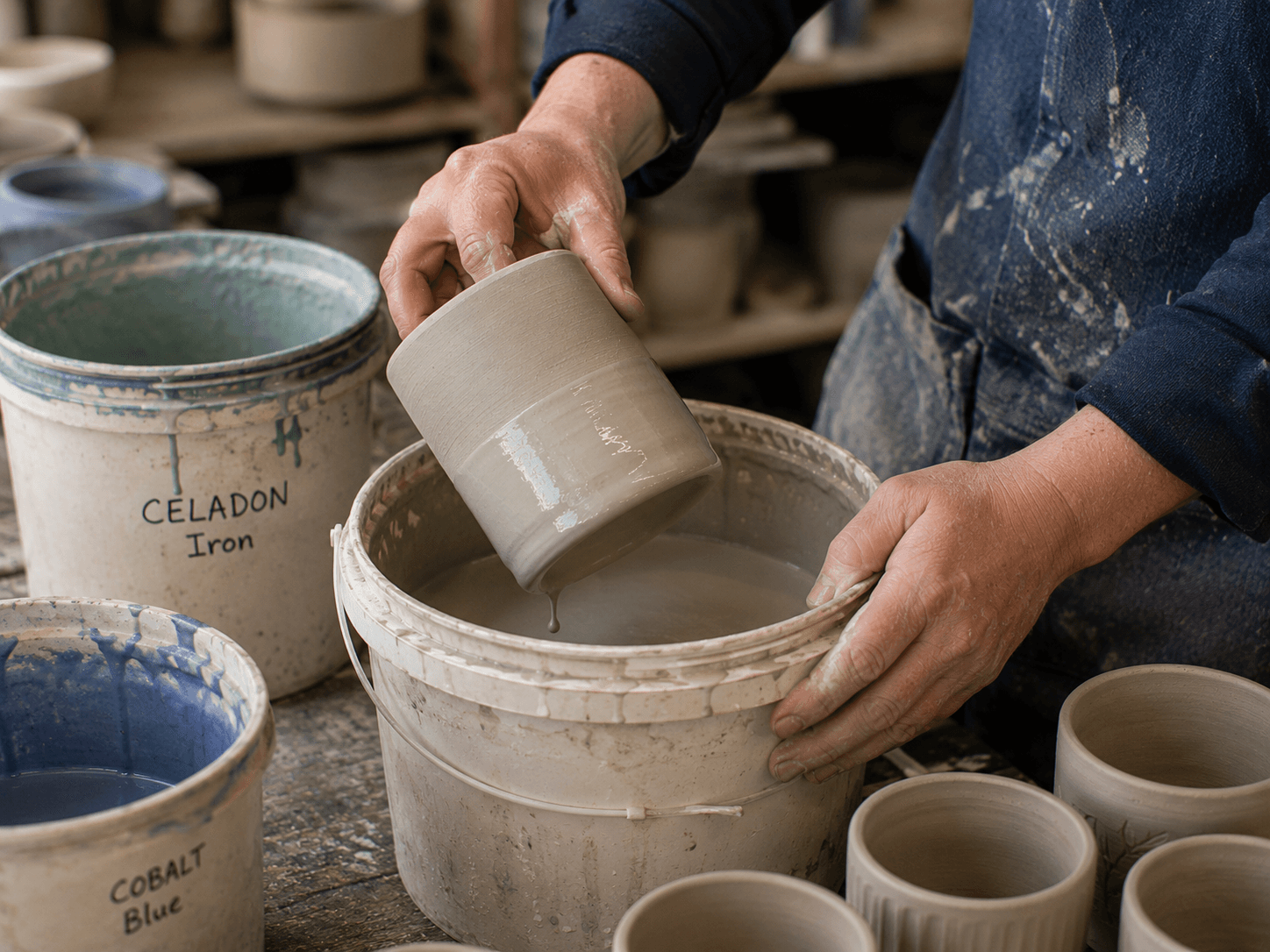
Our glazes are mixed in-studio from raw materials — feldspar, silica, kaolin, wood ash, and metal oxides for colour. We keep a small palette: forest green, oat, iron red, deep clay. All earthy, all matte or satin rather than glassy. Each pot is dipped or brush-glazed, sometimes both, leaving the foot bare so it sits cleanly.
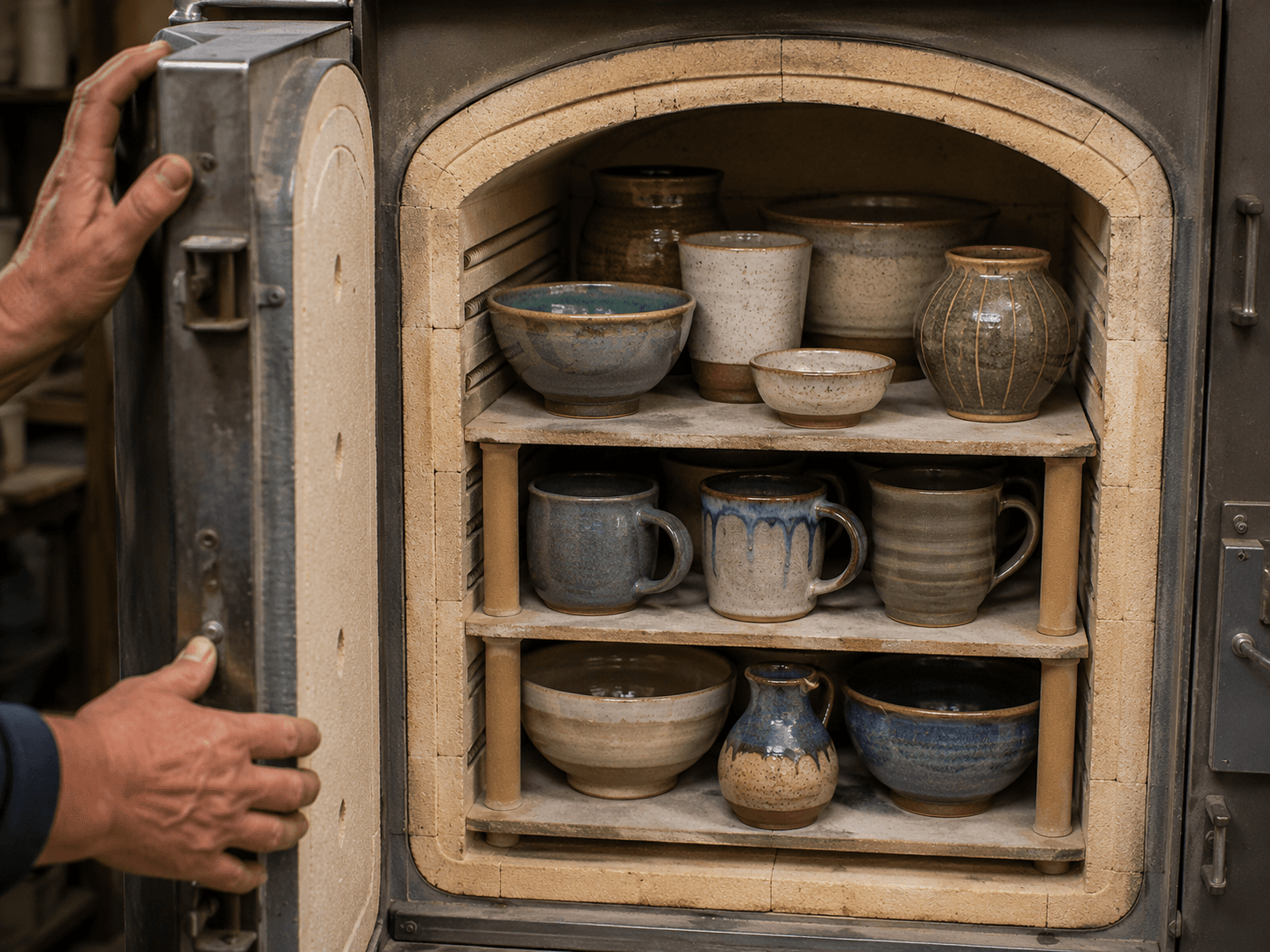
The kiln fires to 1240°C over roughly eight hours, then cools slowly for twenty-four. Opening the kiln is always a moment of uncertainty — glazes behave slightly differently each time depending on how the load sits and how the atmosphere inside develops. That unpredictability is part of why each pot is its own thing.
Six forms, each designed for a different kind of plant and a different kind of room. All made in the same small studio in Kent.
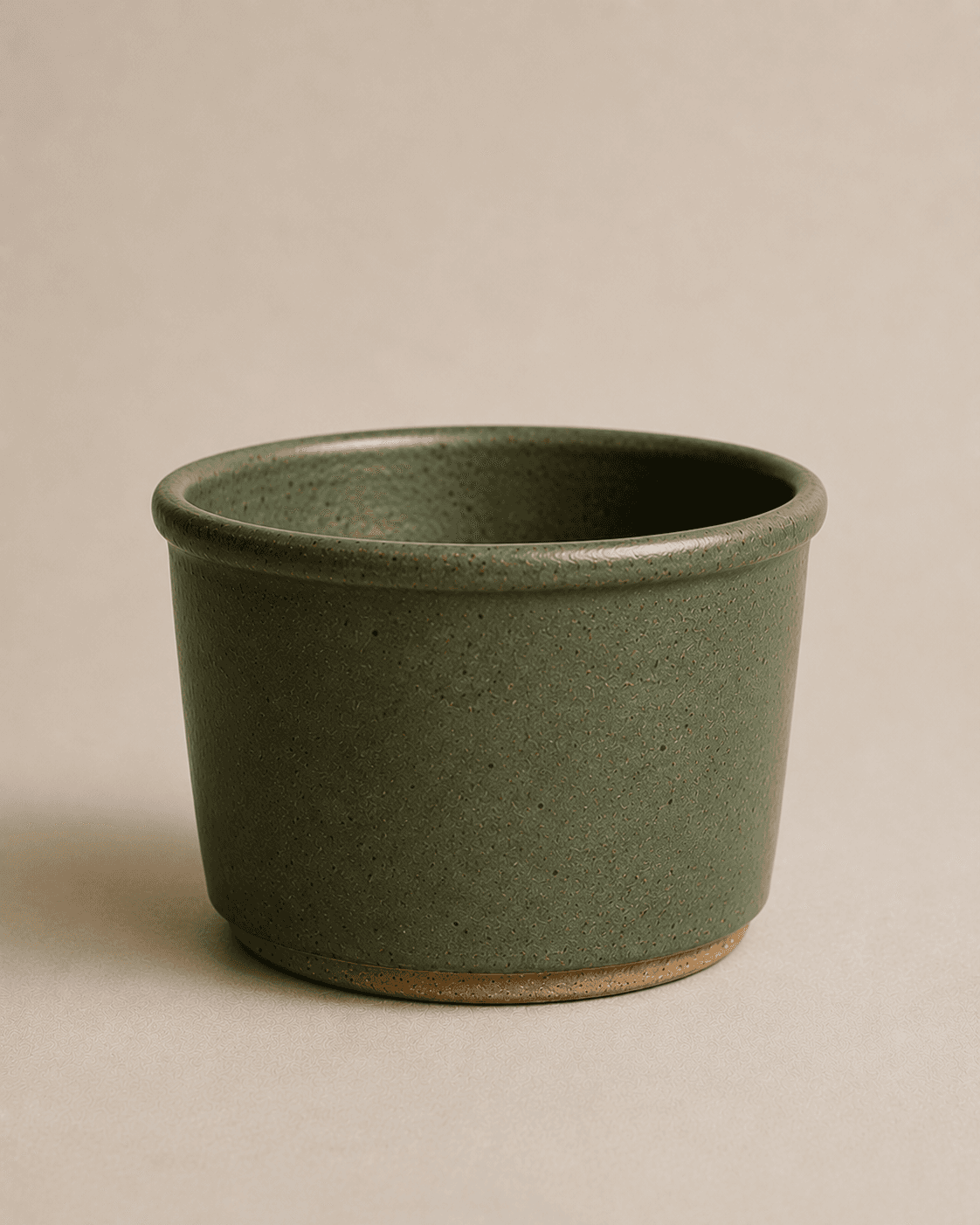
Round planting pot, classic form. Speckled stoneware with a dark forest-green matte glaze. The workhorse of the range.
Available in 9, 12, 15 cm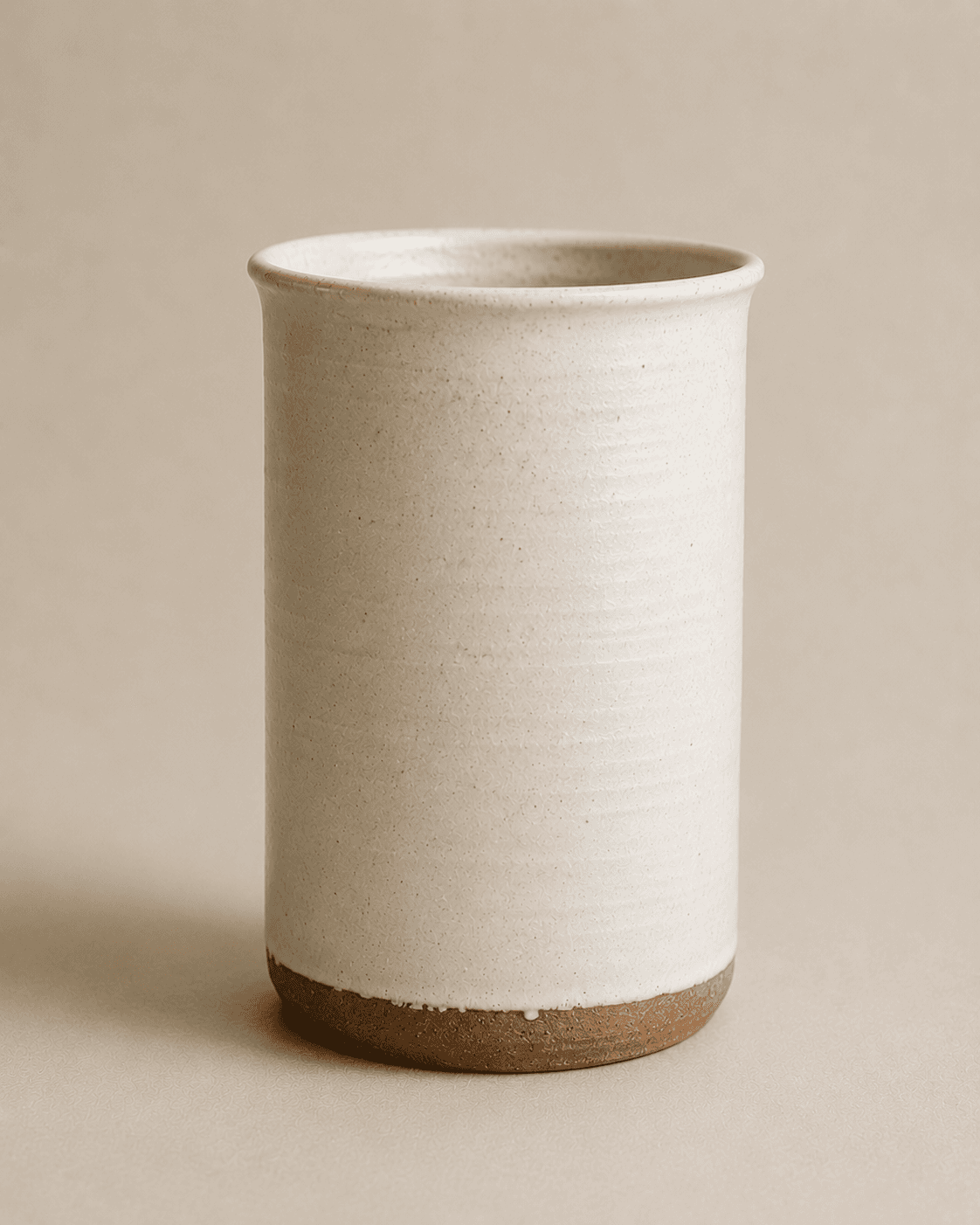
Tall cylinder with a slightly flared rim. Iron-red clay body with a chalk-white satin glaze. Good for anything that wants height.
Available in 12, 20 cm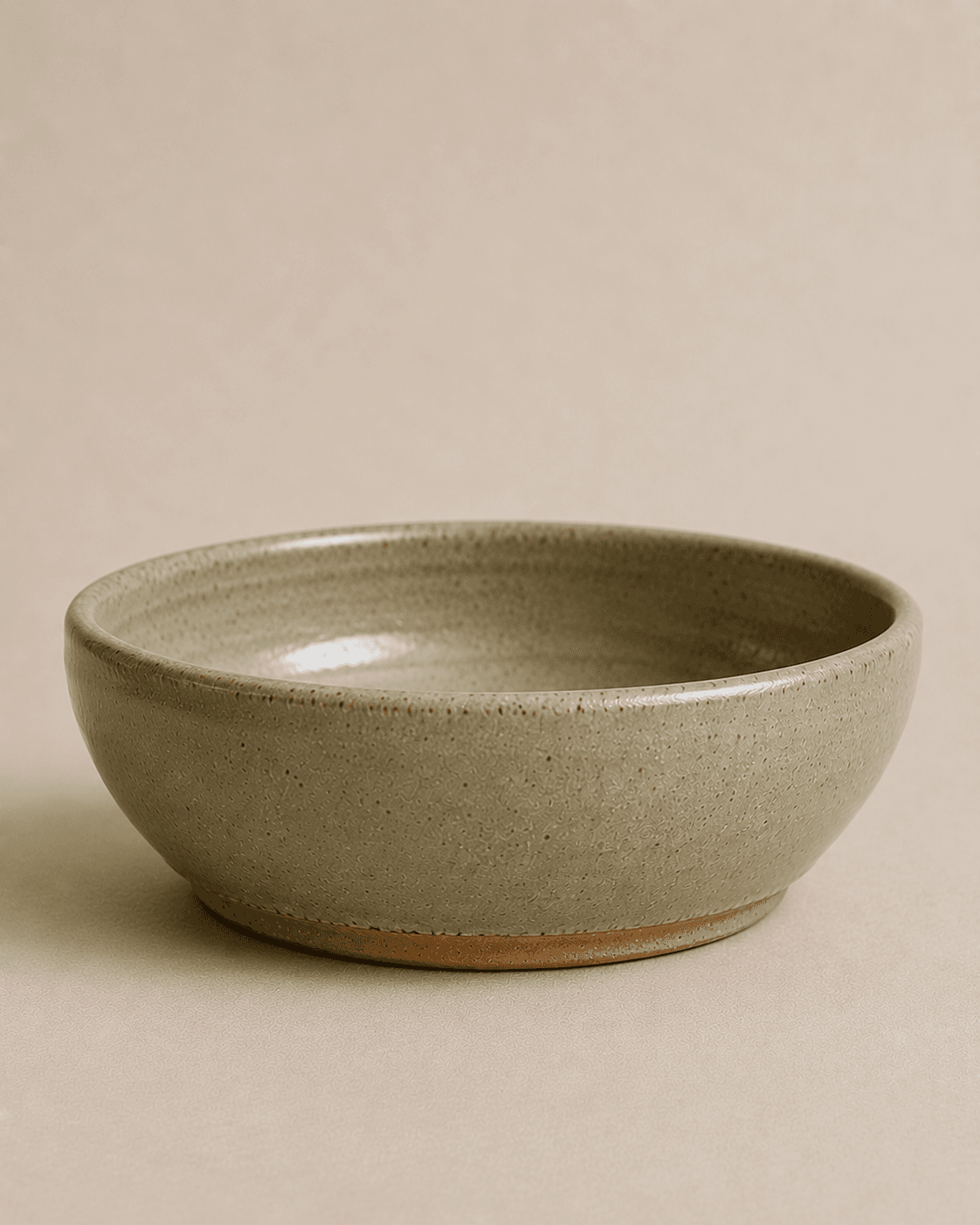
Wide, shallow planting bowl for succulents and trailing plants. Warm terracotta clay with an ash-sage glaze that breaks at the edges.
Available in 15, 20 cm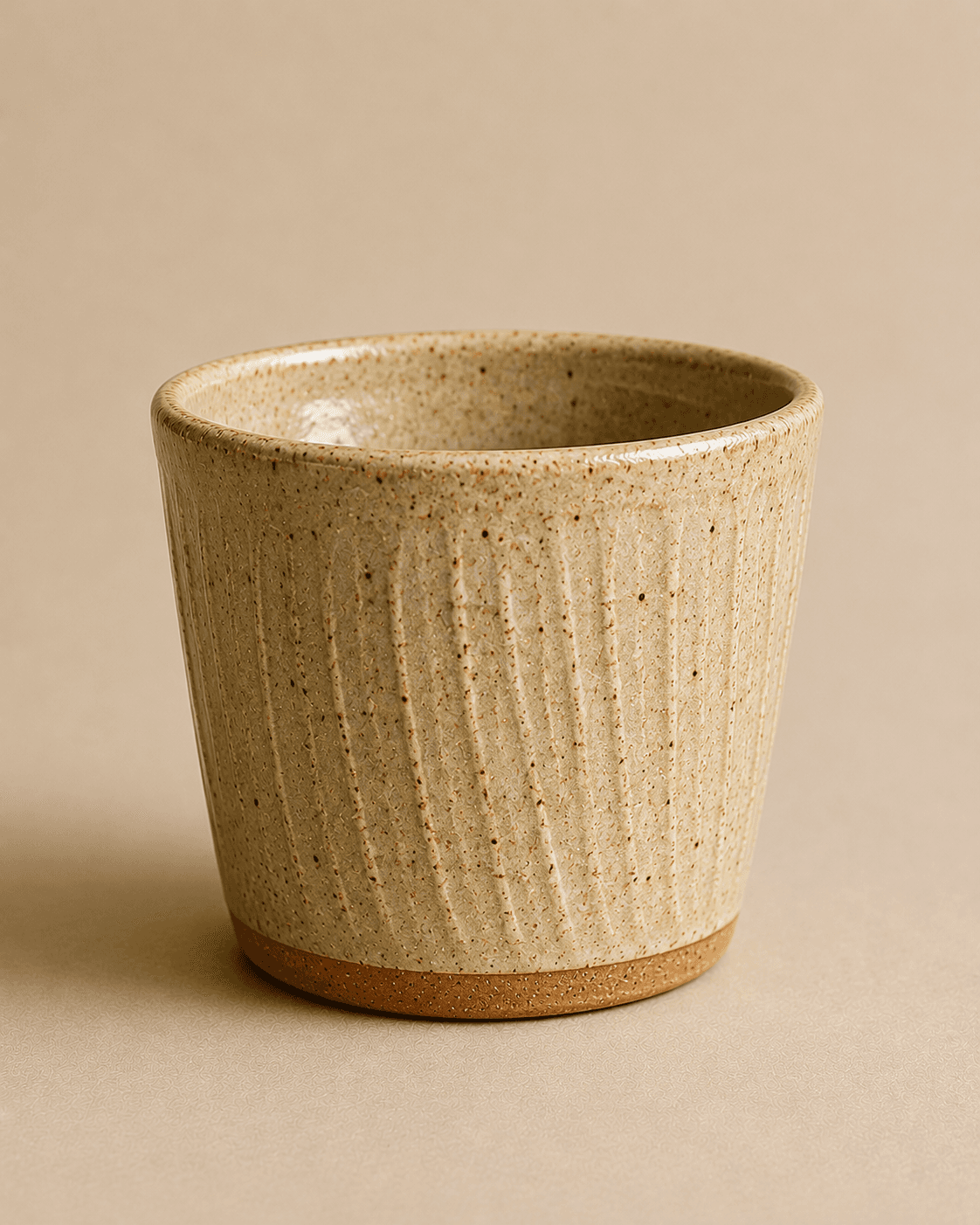
Tapered pot with a hand-textured exterior. Salt-and-pepper stoneware with a deep oat glaze. Each one reads differently depending on the texture.
Available in 9, 12 cm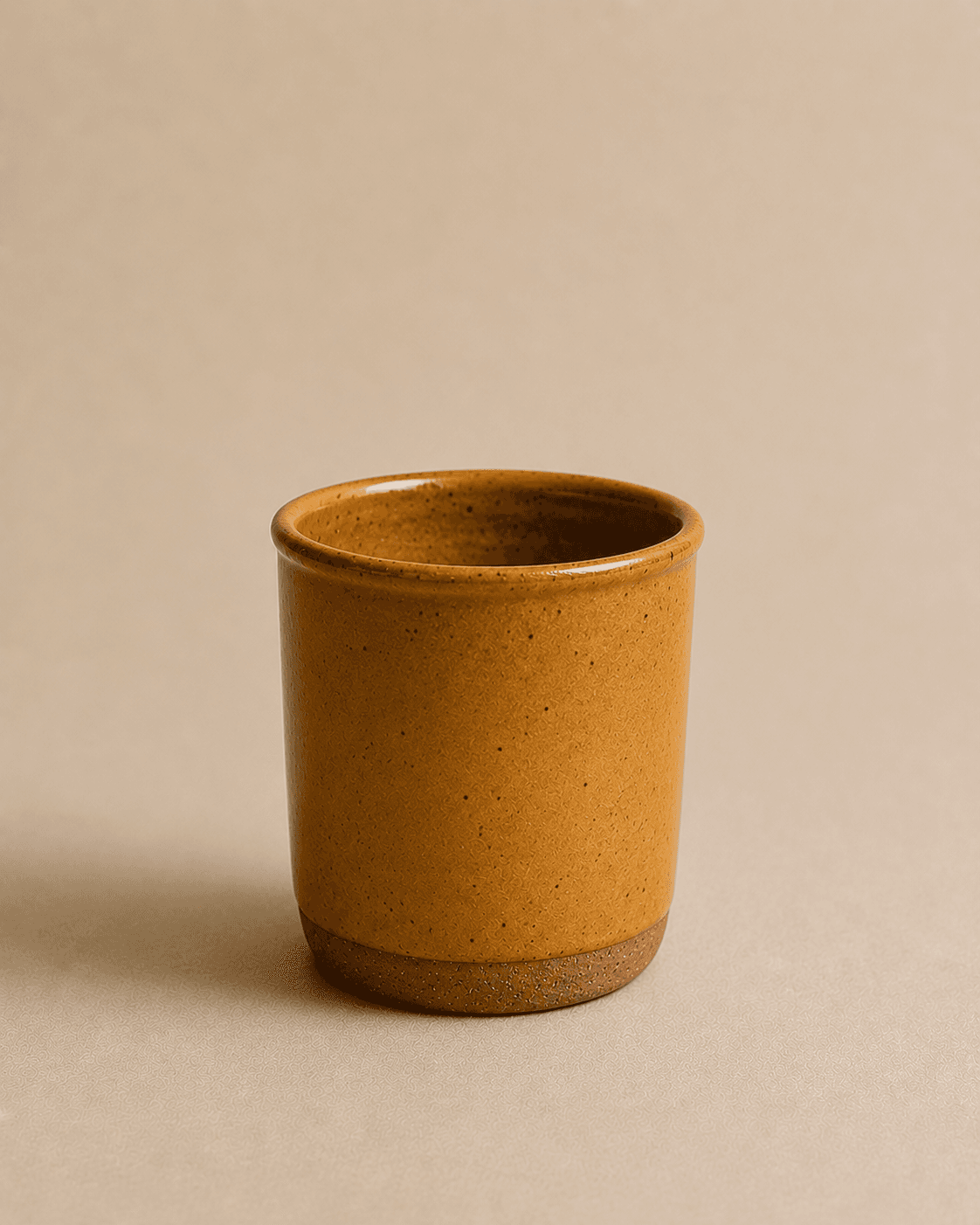
Small propagating pot with a narrow rim. Smooth fine stoneware with a honey-amber glaze. For a cutting, a small herb, or something you want to watch closely.
Available in 9 cm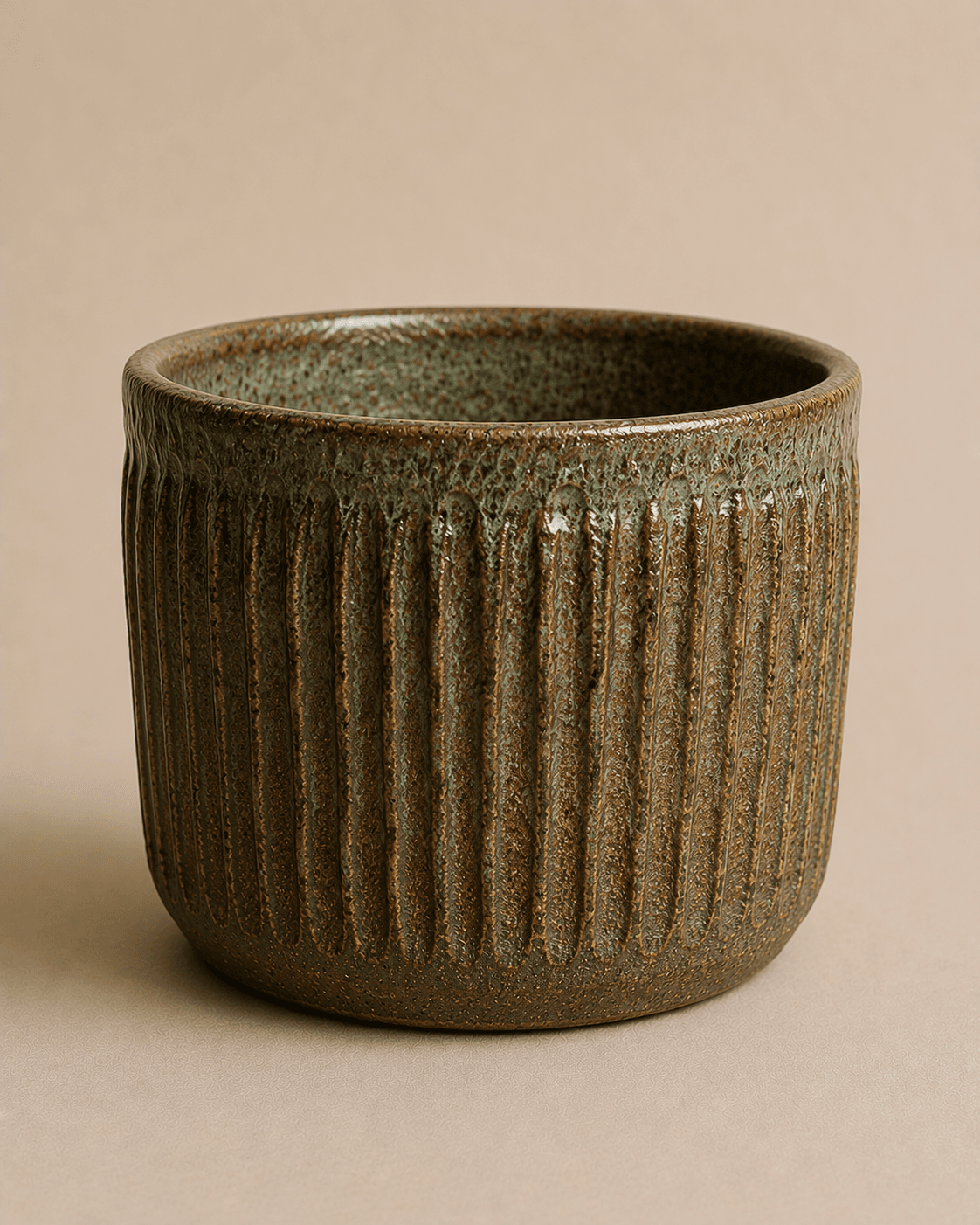
A large statement pot. Heavily textured exterior in a dark iron-rich clay with a copper-green glaze that breaks over the ridges.
Available in 20 cm“We make what we’d want to use ourselves. Small batches, honest materials, no two exactly alike. If you’d like to know when the next batch is ready, the newsletter is the best way.”
— patient with us