
Soil & feeding
What your plants actually need — Most houseplants do fine in decent compost with a feed now and then. Here's what to use, when to use it, and when to leave well alone.
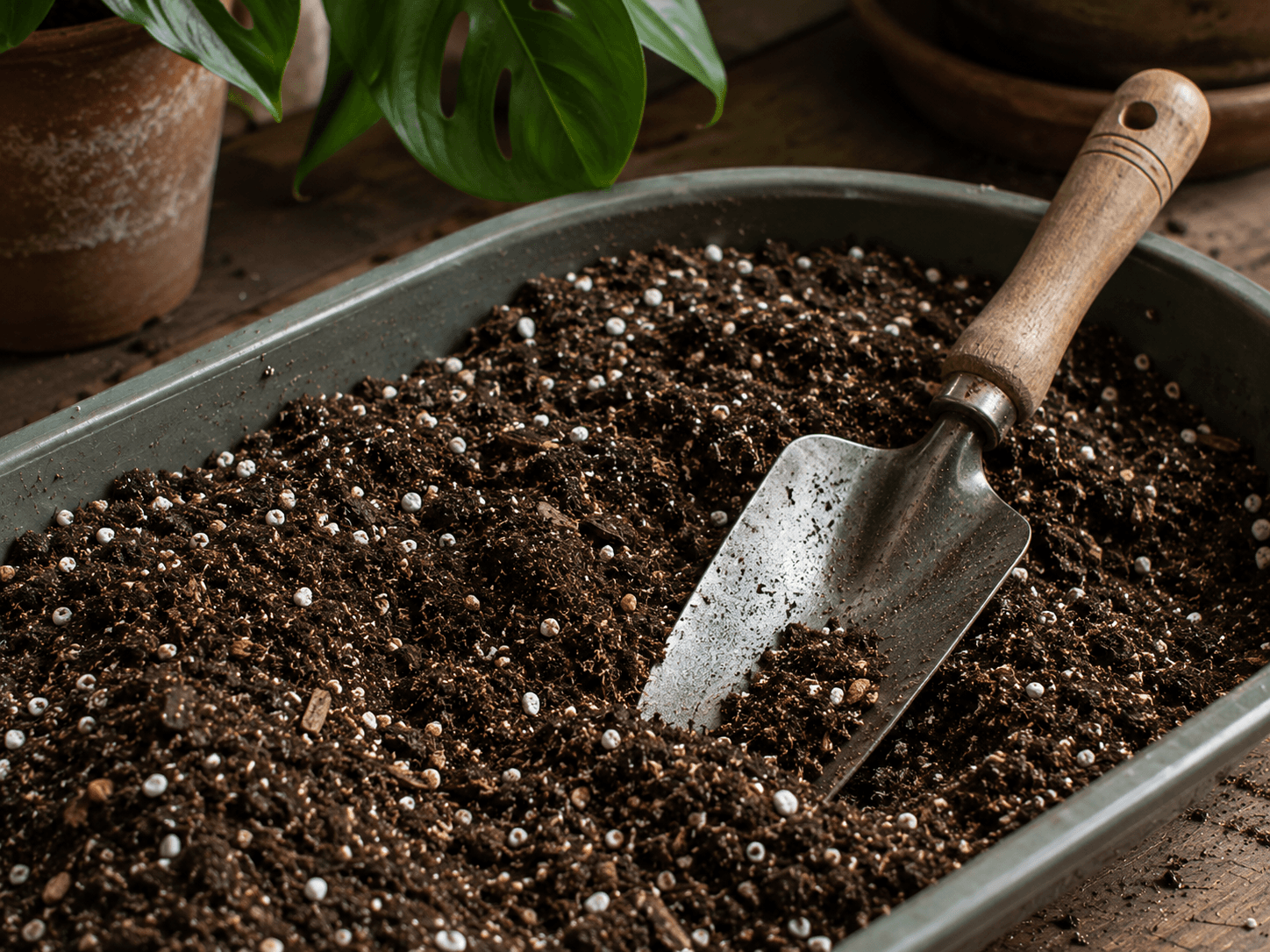
What most houseplants need
A decent peat-free multipurpose compost is fine for most plants straight from the bag. Some want extra drainage — succulents and cacti do best in a grittier mix, so add about a third perlite or coarse horticultural grit. Aroids like monsteras and pothos appreciate a chunkier mix with some orchid bark added.
Avoid garden soil in pots. It compacts, drains poorly, and often brings in pests. Bag compost is cheap and consistent enough that there's no reason to improvise.
When to feed
Feed during the growing season: roughly March to September in the UK. Not in winter. Plants are barely growing from October to February, and unused fertiliser builds up as salt in the compost, which scorches roots.
If your plant has been in the same pot for more than a year, feeding is particularly worthwhile — compost nutrients are largely depleted by then. Freshly repotted plants need a month's grace before feeding starts.
Which fertiliser
A balanced liquid feed with equal N-P-K values (something like 20-20-20) does the job for most foliage houseplants. Use it monthly during the growing season, at half the stated dose — slightly too little is better than slightly too much.
Tomato feed (higher in potassium) encourages flowering and fruiting, and works well for anything you want to bloom. Orchids have their own specialist feed. Most other 'houseplant feeds' are the same balanced formula with different branding.
Signs of overfeeding
Leaf tips turning brown and crispy despite consistent watering. A white crust forming on the surface of the compost or on terracotta pots. These are signs of fertiliser salt build-up.
Stop feeding and flush the compost with a generous amount of plain water to rinse the salts through. Let it drain fully, then repeat once more. Most plants recover quickly once the excess is cleared.