
Humidity
For the fussier ones — Most plants don't need a humidifier. Some genuinely do. A short guide to which ones care — and what to do if your house is very dry.
Which plants actually need it
Ferns, calatheas, marantas, and most orchids genuinely struggle in dry air. Their leaves are adapted to the humidity of forest floors and cloud forests — a centrally heated living room in January is a long way from that.
Monsteras, pothos, snake plants, and ZZ plants are much more tolerant. They evolved in environments with distinct dry seasons and cope fine in a standard UK home without any intervention. Don't over-engineer the care for plants that don't need it.
Signs your plant is struggling with low humidity
Brown, crispy tips — especially on ferns and calatheas. Leaves that curl inwards along their length. Yellowing at the edges of leaves that spreads inward over time.
These symptoms overlap with underwatering and overwatering, so check the soil first. If the moisture is right and the problem persists, humidity is the likely culprit.
What actually helps
Grouping plants together raises local humidity slightly — they transpire and create a more humid microclimate around themselves. A pebble tray filled with water beneath the pot adds some moisture to the surrounding air as it evaporates (make sure the pot sits on the pebbles, not in the water).
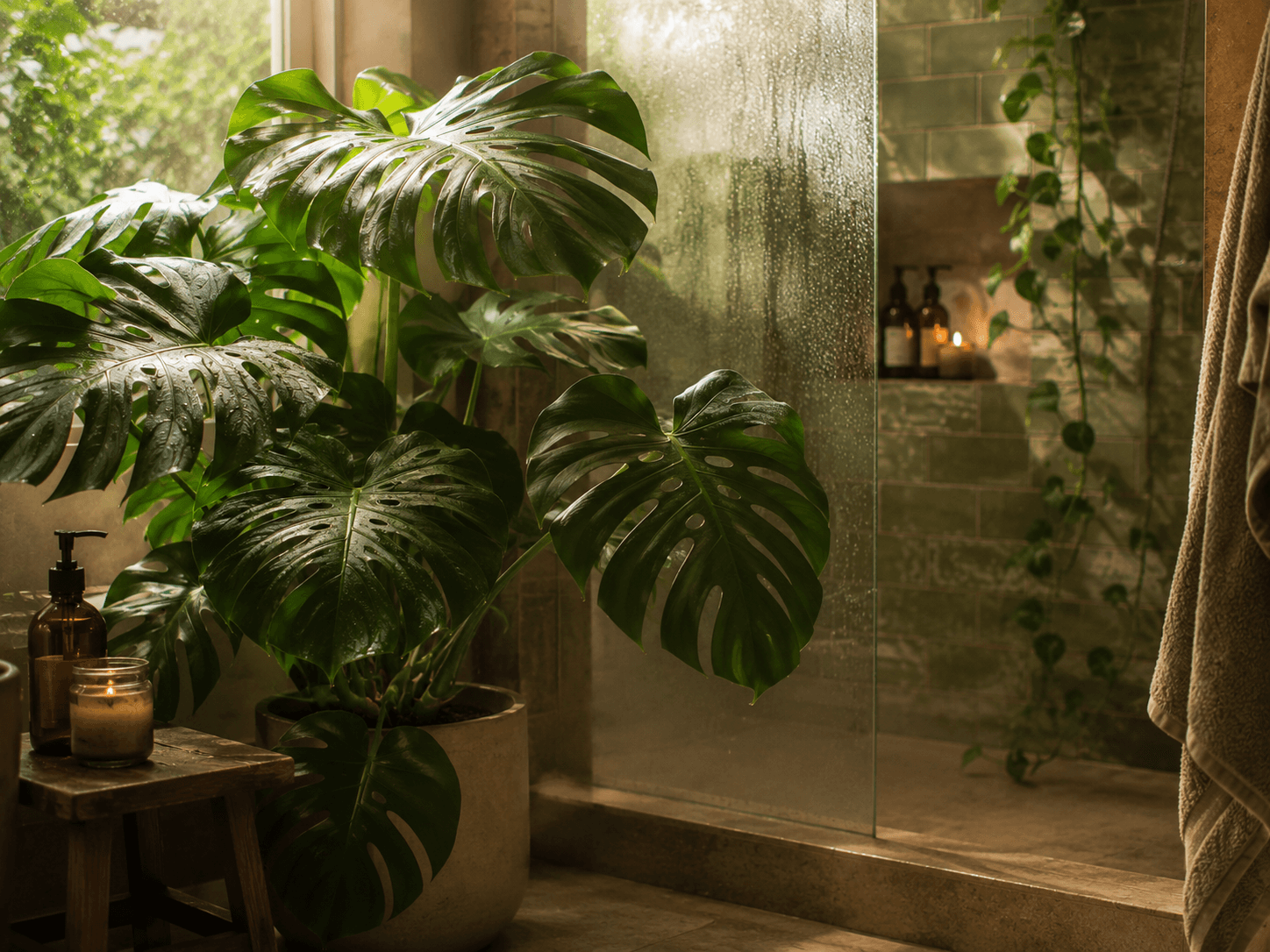
A small humidifier near high-needs plants is the most effective solution if your home runs very dry. Bathrooms work well for humidity-loving plants if they get enough light — the steam from showers creates a naturally more humid environment.
What doesn't help
Misting. It raises humidity for about ten minutes, leaves water on leaves (which can encourage mould and fungal problems on susceptible plants), and doesn't address the underlying condition.
It's not harmful in moderation, but if you're misting because your fern looks unhappy, you're treating the symptom rather than the cause. A pebble tray or humidifier will do far more.