
Repotting
When and how to move up — Roots creeping out the bottom, compost going bone dry in hours — your plant is telling you it needs more space. Here's how to do it without the drama.
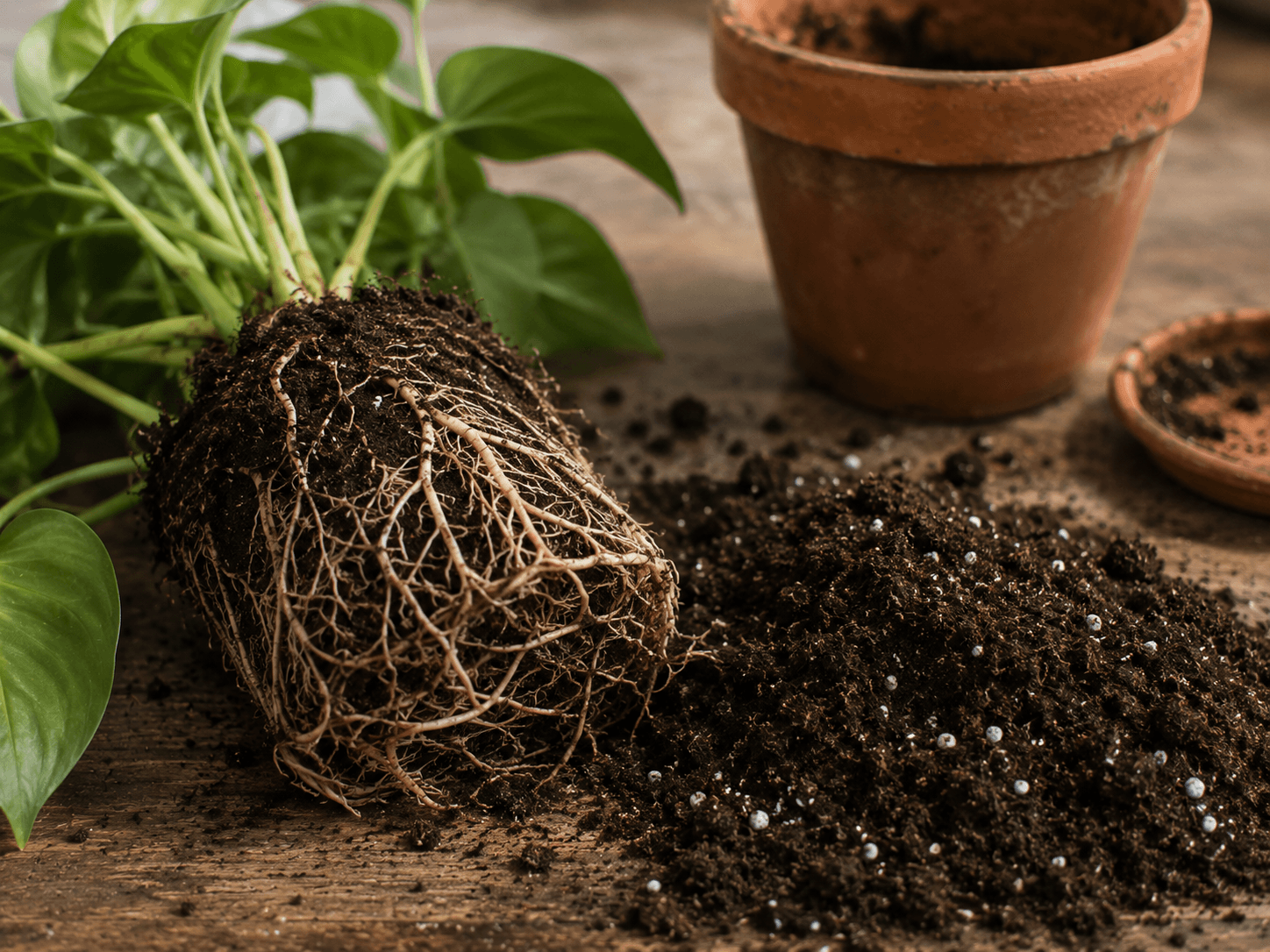
Signs your plant needs more room
Roots circling the bottom of the pot or poking out of drainage holes are the clearest sign. Compost that dries out in hours rather than days. A plant that's visibly outgrown its pot — leaning, top-heavy, or looking squeezed. Stunted growth during the growing season despite good care.
Any one of these is reason enough to repot. You don't need all four.
Choosing the right pot
Go one size up — roughly 2–4 cm larger in diameter. Don't jump to a much bigger pot; loose wet compost around small roots stays wet and rots them. Bigger isn't better here.
Make sure it has drainage holes. Terracotta dries faster than plastic or glazed ceramic, which can be useful if you overwater. If you love a pot without drainage, use it as a cache pot with the plant in a plain nursery pot inside.
How to do it
Water the plant the day before so the root ball holds together. Remove the plant, shake off loose compost, and gently loosen any tightly circling roots with your fingers — left unchecked, they can eventually girdle the plant.
Add a layer of fresh compost to the new pot. Set the plant at the same depth as before — burying the stem on most houseplants does more harm than good. Fill around the sides, firm gently to remove air pockets, and water in well.
Aftercare
Put it somewhere bright but out of direct sun for a week or two. Skip the fertiliser for a month — fresh compost has enough nutrients to get started, and feeding stressed roots can burn them.
Some leaves may yellow or drop. That's normal transplant stress. As long as new growth appears within a few weeks, the repot went well.