
The allotment
What the first year actually looks like — Getting an allotment is exciting. The reality of the first year is usually humbling. Here's what to expect — and how to make it work.
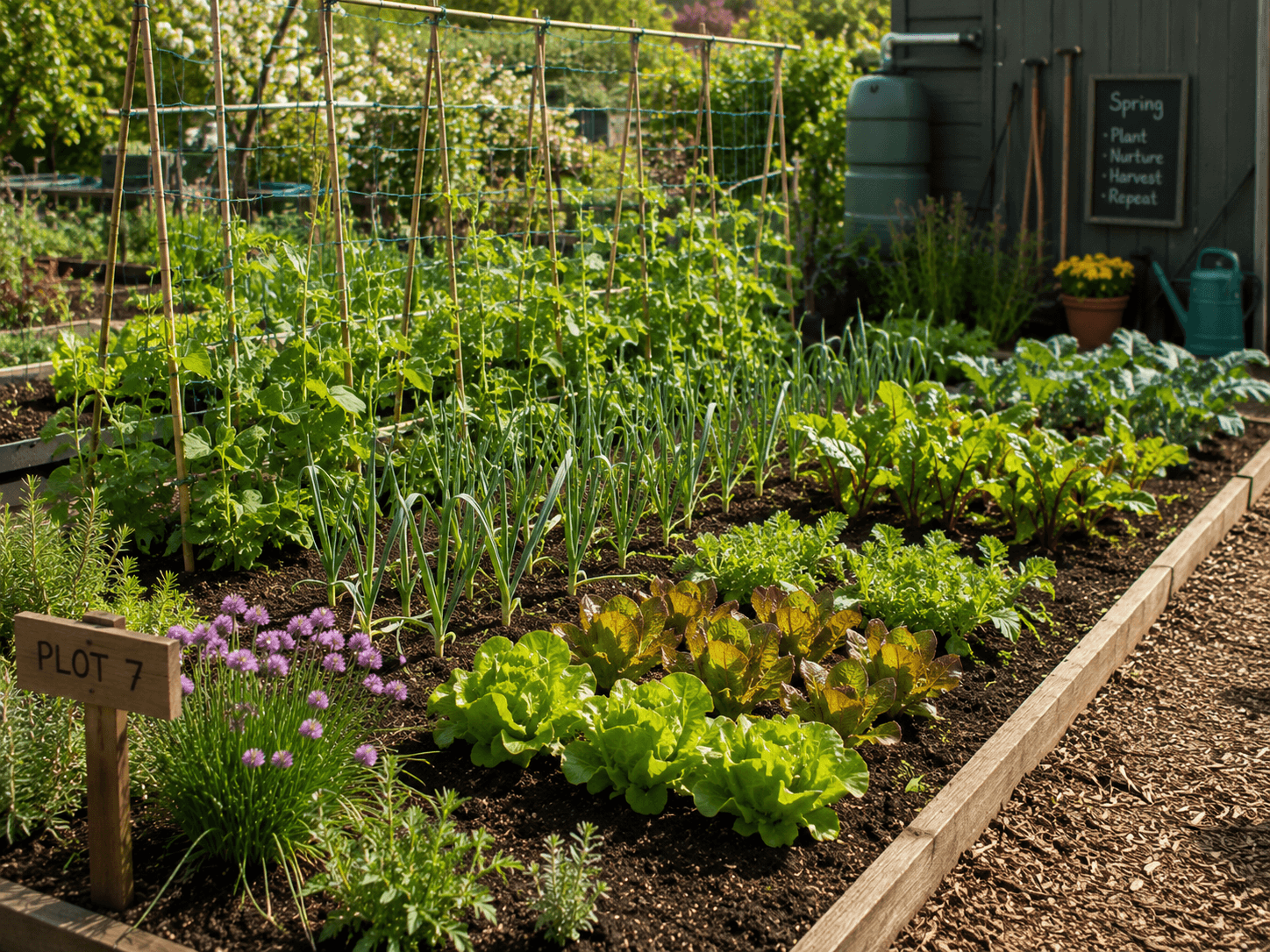
Getting a plot
Most local councils run allotment waiting lists — some are a few months, some are years. Register with your local authority as early as you can, and put your name on multiple lists if your area has more than one site. Many councils now have an online form; some still require a phone call.
Half-plots are worth asking about. A full plot is typically 250 square metres — more than most people can manage in the first year alongside everything else. A half-plot is a sensible place to start. You can always take on more later.
The first year
Don't try to grow everything. The impulse is to clear the whole plot and plant it up immediately. The reality is that clearing ground properly takes far longer than expected, and an overstretched first year often puts people off.
Clear one section well rather than the whole plot badly. Courgettes, salad leaves, and French beans are reliable for beginners — they grow fast, forgive irregular attention, and produce well. Treat the first year as learning the land: its drainage, its weed burden, its microclimates. The growing knowledge builds faster than you expect.
Dealing with weeds
The weeds always win at first, especially on a neglected plot. Annual weeds — chickweed, groundsel, hairy bittercress — are manageable with regular hoeing. Perennial weeds are harder: bindweed, couch grass, and dock have deep root systems and will regrow from small fragments left in the soil.
A thick layer of cardboard topped with a 10cm layer of compost or wood chip suppresses annual weeds and improves the soil over winter — the 'no-dig' approach. For perennial weeds, persistent digging or covering with opaque membrane for a full season is the most reliable method. Don't compost perennial weed roots; bag them for the council.
Making it sustainable
An allotment is a long-term relationship, not a project. The growers who keep their plots for years are the ones who find it genuinely restful — not the ones who treat it as a productivity exercise.
Be honest about what you can tend. A small, well-maintained plot is better than a large neglected one — for your own enjoyment and for the plants. Focus on crops you actually eat. Accept that some things won't work some years; that's not failure, it's growing.