
Seasonal calendar
What to do and when — A month-by-month guide to the UK growing year — honest about the gaps, the slow periods, and the moments when everything happens at once.
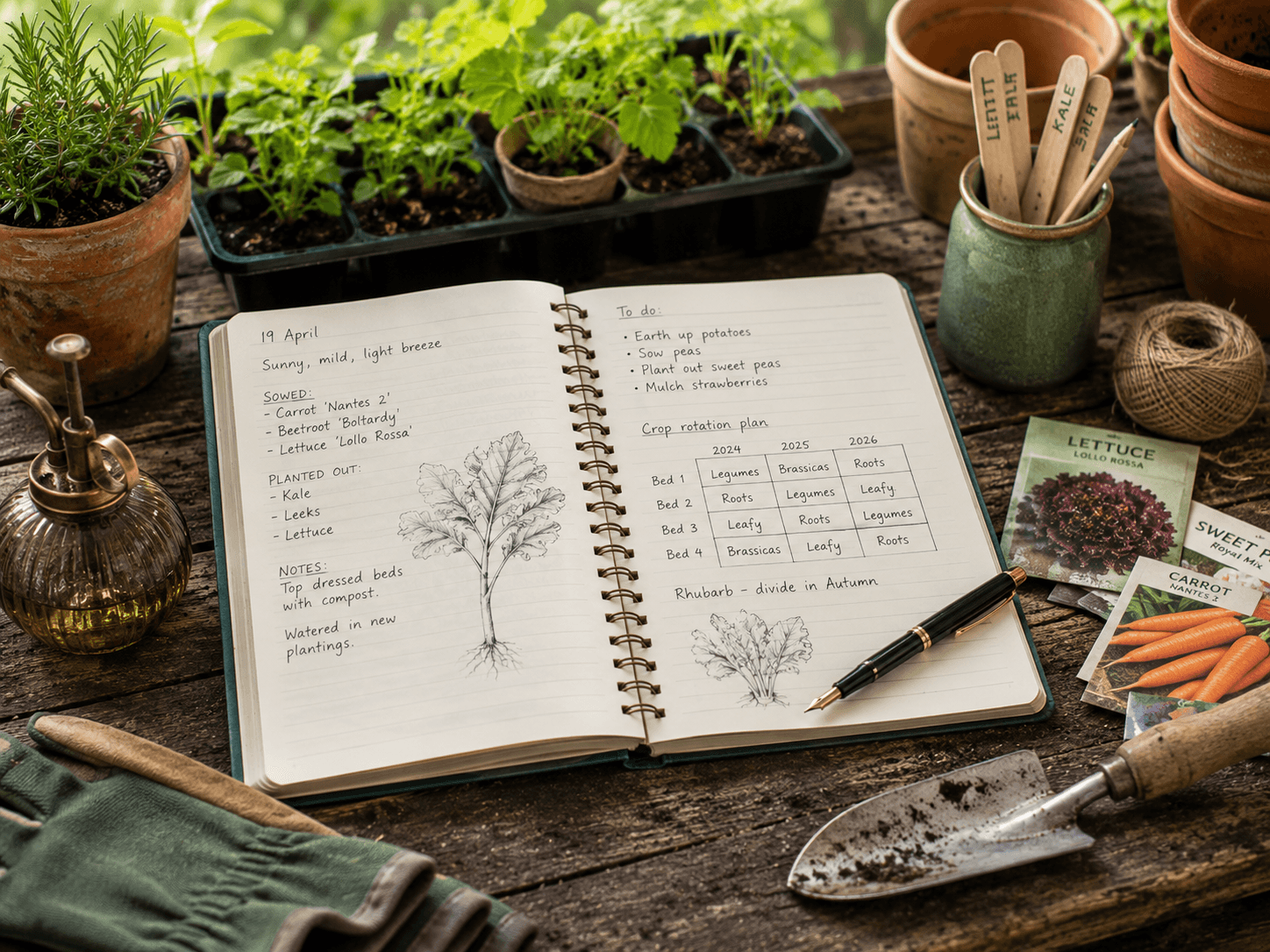
January & February — plan, don't panic
Most of the garden is dormant and that's fine. Use this time to order seeds (do it early — popular varieties sell out), plan what you're growing and where, and sort out pots, trays, and compost so you're ready when sowing starts.
You can start a small number of crops in a heated propagator from late January: onions, leeks, celery, and chillies all benefit from a long growing season. But for most things, starting now just means leggy seedlings and frustration. There's no prize for earliness.
March & April — sowing starts in earnest
Mid-March is when the season properly begins. Sow tomatoes, peppers, aubergines, and basil indoors. Hardy crops — peas, broad beans, salad leaves, radishes, spinach — can go outside from late March as the soil warms. Sow sweet peas if you want them.
Chit seed potatoes (leave them in a cool bright place to sprout) from March, ready to plant out in April or once the risk of hard frost has passed. Start hardening off any indoor-raised seedlings in April — set them outside during the day and bring them in at night to acclimatise to outdoor conditions.
May & June — planting out
After the last frost — usually mid to late May depending on where you are in the UK — tender plants can go outside. Tomatoes, courgettes, cucumbers, squash, and French beans all go out now. Don't rush it; a single frost will set you back weeks.
This is also when the work intensifies. Water regularly as temperatures rise, especially for anything in containers. Net brassicas before cabbage white butterflies find them — once the caterpillars are in, they're hard to clear. Succession sow salad every couple of weeks.
July–September — harvest, then think ahead
This is what it's all for. Harvest regularly — courgettes go from ideal to marrow in a day in warm weather. Pick beans before they get stringy. Tomatoes ripen from the bottom of the truss upward; don't wait for all of them.
From late July, start thinking about autumn and winter. Sow overwintering salad crops, spring cabbages, and Oriental leaves. Plant garlic from October. Clear spent crops promptly and compost or dig in the remains to improve the soil for next year. By September, the season is winding down — but a well-planned plot still has plenty to give.