
Where to put a plant
Starting with the room, not the plant — Most people choose the plant first, then look for somewhere to put it. It works better the other way round — find the spot, then find the plant that suits it.
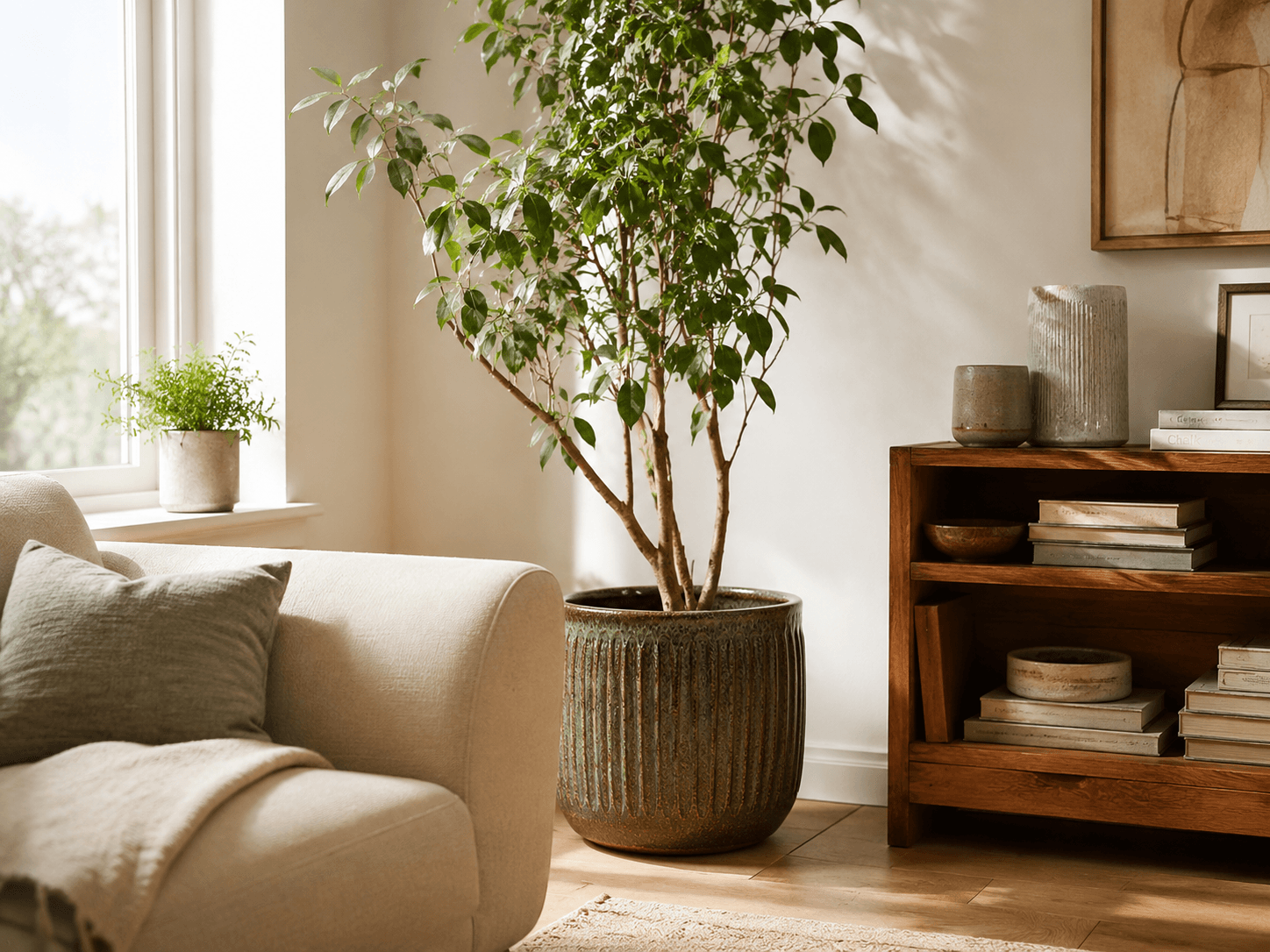
Read the light before you buy anything
A south-facing window is your best real estate — bright most of the day, warm in summer, workable in winter. East and west windows are good: morning sun or afternoon sun, neither extreme. North-facing rooms are the hardest; low light year-round, and genuinely limiting for most plants.
Before you buy, stand in the spot you have in mind at midday on a grey day. If you need a lamp to read comfortably, the spot is too dark for most plants. That doesn't mean nothing will grow there — ZZ plants, cast iron plants, and pothos are genuinely tolerant — but it does rule out most of the plants you'll see on Instagram.
Think about what the plant is doing in the room
A plant beside an armchair is doing something different from a plant in a corner. The armchair plant is close — you'll see it, smell it, brush past it. It needs to be relatively tidy, non-scratchy, and not one that drops leaves everywhere. The corner plant can be bigger and more dramatic, but it also has to earn the space — a small pot in a large corner just looks lost.
Scale matters more than people expect. A 20cm plant on the floor of a room with high ceilings disappears. A large-leafed floor plant — a fiddle-leaf fig, a bird of paradise, a big monstera — gives a room a living focal point that no piece of furniture quite replicates. Think about the negative space you're filling, not just the plant.
The spots that reliably work
A bright corner formed by two windows, if you're lucky enough to have one, suits almost any plant. The kitchen windowsill behind the sink — often dismissed — is good because it catches indirect light and the ambient humidity from washing up helps humidity-loving herbs and small plants. A bedside table near a window works well for small, low-maintenance plants that earn their keep as visual rest before sleep.
Empty corners beside sliding doors or patio doors are underused in most homes. They get good indirect light, floor space, and room for something tall. If you have a corner like that and nothing in it, it's asking for a plant.
The spots that don't work as well as they look
Beside a radiator is the most common mistake. It looks natural — the plant fills a gap between radiator and wall — but the dry heat damages most houseplants through autumn and winter. If you have a plant next to a radiator that's been declining since October, that's probably why.
On top of or behind a television that runs warm is similarly problematic. Dark recesses in built-in shelving often look like good plant spots but rarely are — the light is usually too low and air circulation too poor. A plant there will survive for a while, then slowly struggle. Better to put it somewhere it can actually thrive and let the alcove hold something else.