
Tomatoes
The ones that don't always work — Tomatoes in the UK are a commitment. They need time, attention, and a bit of luck with the weather. Here's how to give them the best chance.
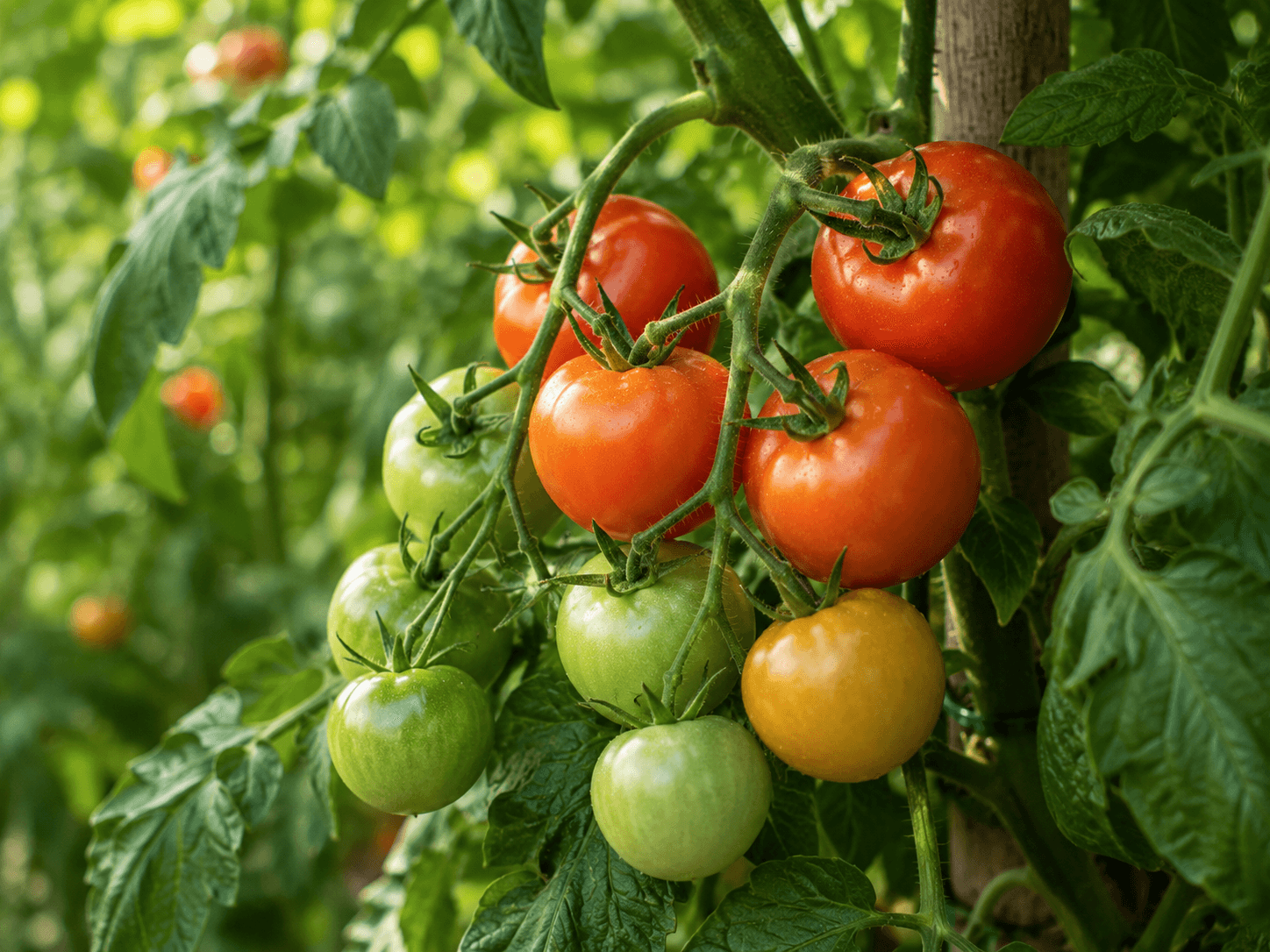
Start later than you think
In the UK, sowing tomatoes before mid-March means you'll have leggy seedlings sitting on a windowsill waiting weeks for temperatures to warm up. Mid-March to early April is the sweet spot for windowsill or greenhouse growing. If you're planting outside, remember that tomatoes can't go out until after the last frost — usually late May.
Later sowing catches up fast. A plant sown in April and well looked after will often outperform one sown in February that spent months in low light getting leggy.
Cordon versus bush
Cordon (indeterminate) varieties grow tall, need staking, and require their side shoots pinched out regularly. They produce fruit over a long season and suit greenhouse growing well. Gardener's Delight, Sungold, and Alicante are reliable UK varieties.
Bush (determinate) varieties are lower-maintenance, don't need side-shooting, and stay compact. They suit containers and outdoor growing well. For a first year, or if you don't have a greenhouse, a bush variety is more forgiving. Tumbling Tom is good for hanging baskets; Red Alert works well in large pots.
Side shoot removal
On cordon varieties, side shoots grow in the junction between the main stem and a leaf branch — the axil. Remove them when they're small, thumbnail-sized. At that stage they snap off cleanly with your fingers. Left to grow, they become a second main stem and split the plant's energy.
Side-shoot regularly, every week or so during the growing season. It sounds like a lot of work, but it keeps the plant focused on producing fruit rather than bulk. Stop the plant's growth (pinch out the growing tip) after four or five trusses of flowers have set if you're growing outside — there won't be enough season for fruit higher up to ripen.
Why they fail
Blight is the most common killer of outdoor tomatoes in the UK. It spreads rapidly in wet, warm conditions — the kind of summer we often get. Growing in a greenhouse or poly tunnel gives significant protection. If blight hits, remove affected leaves immediately and don't compost them.
Blossom end rot — black, leathery patches on the base of the fruit — is caused by calcium deficiency, usually brought on by irregular watering. Keep moisture levels consistent rather than alternating between bone dry and soaking. Yellow lower leaves are usually just the plant shedding old growth as it focuses on the fruit above.