
Starting from seed
The basics before anything else — Seeds are cheap, satisfying, and more reliable than people expect. Here's what you need — and what you don't.
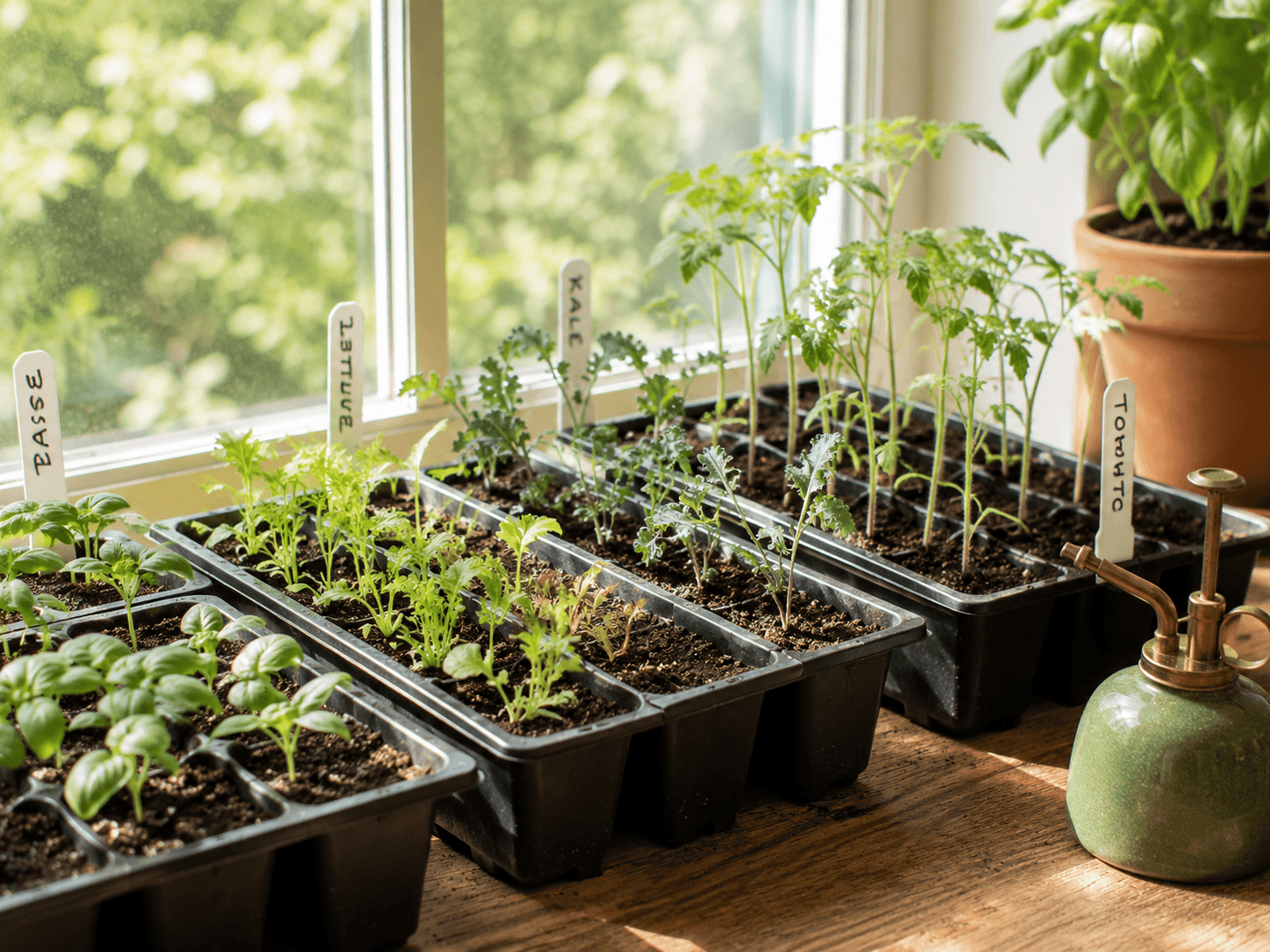
What you actually need
Seed trays or module trays, seed compost (not general multipurpose), and a warm bright windowsill. That's it. You don't need a greenhouse, a heated propagator, or a grow light to get started — though all of those help.
Seed compost matters because it's low in nutrients and drains quickly. Seeds contain everything they need to germinate; rich compost can actually inhibit germination and encourages fungal problems. Use the right stuff from the start.
Sowing depth and spacing
The general rule is to sow at roughly twice the depth of the seed. Tiny seeds — lettuce, snapdragon, lobelia — can simply be pressed into the surface and left uncovered. Large seeds like beans and courgettes go in about 2cm deep.
Spacing matters less at the sowing stage if you're planning to prick out later. If you're direct sowing to final positions, follow the packet. The guidance is there because crowded plants compete for light, water, and nutrients — and most beginners sow far too densely.
Warmth and light
Most seeds germinate best between 15–20°C. A south-facing windowsill is fine in spring once temperatures are consistent. A heated propagator extends the season if you want to start earlier, but it's not essential for most crops.
Once seedlings emerge, they need good light immediately — within a day or two of germination. Seedlings in low light go leggy fast, reaching for the source and becoming weak and pale. Move them to the brightest spot you have as soon as the first shoots appear.
Pricking out
When seedlings have their first true leaves — the pair that appear after the initial seed leaves — they're ready to move into individual modules or small pots. Handle them by a leaf, never the stem. A damaged leaf is recoverable; a damaged stem usually isn't.
Give them room and they'll grow away quickly. Pot them on again when you can see roots at the drainage holes or the plant looks too big for its container. Don't let them become rootbound before they go outside.