
Shelves and windowsills
Making plants work with what you already have — You don't need plant stands or purpose-built displays. Most homes have all the surfaces they need — it's more a question of what to put where.
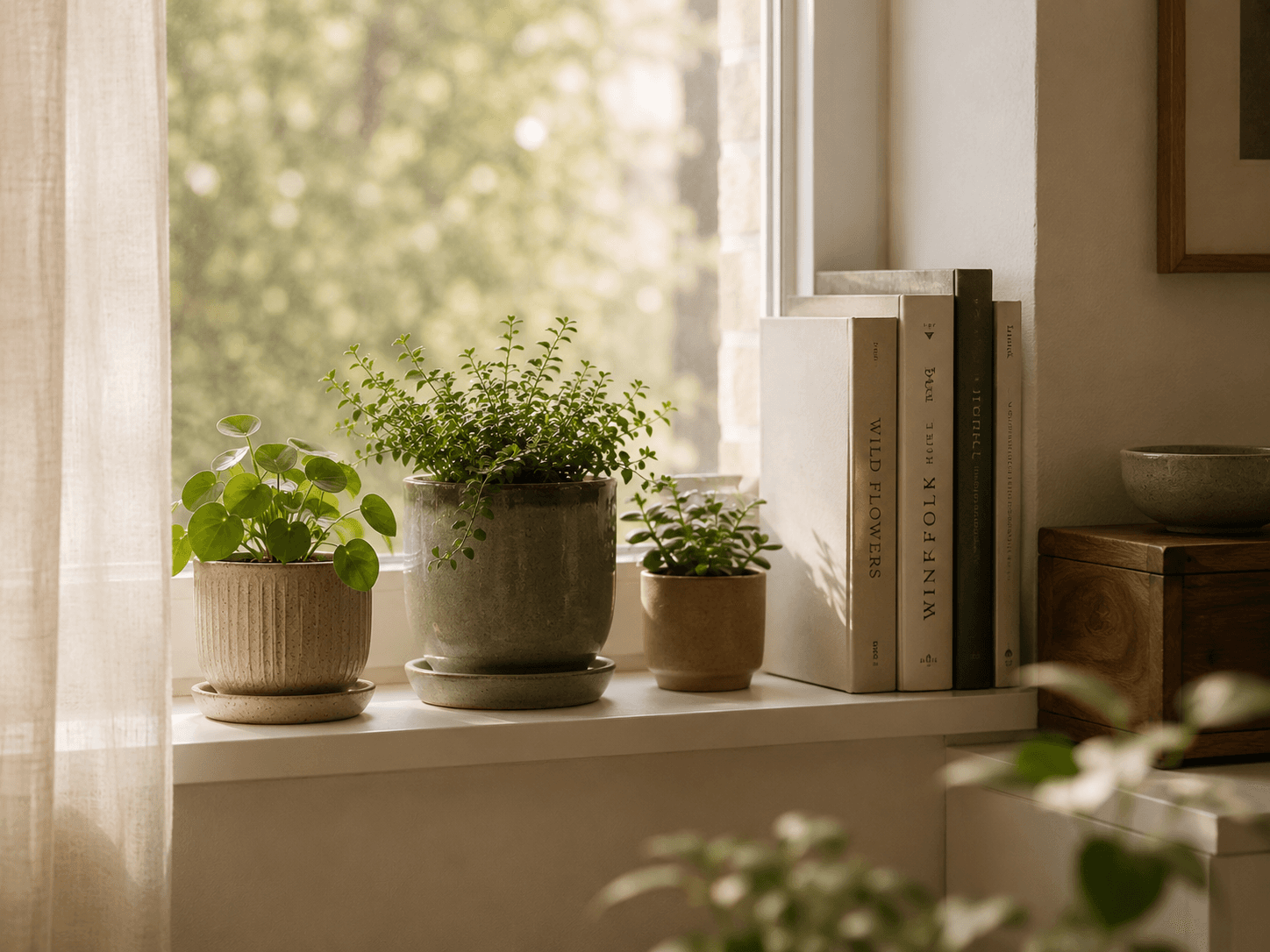
The windowsill
The windowsill is the best plant real estate in most homes and it's often either empty or covered in things that aren't plants. South and west-facing sills can hold almost anything — herbs, succulents, bright-light tropicals, smaller specimen plants. East-facing sills are good for most foliage plants. North-facing sills are limiting; small low-light plants only.
Depth matters. A wide Victorian sill can hold several pots with room for a book or two; a shallow modern sill holds one pot or two small ones at most. Work with what you have rather than forcing more in — a crowded windowsill looks messy and the plants compete for light.
Not every shelf needs a plant
The temptation when styling shelves is to add a plant to every level. The result is usually too much — a shelf that looks like a garden centre rather than a room. Restraint is more effective. One trailing plant at the top of a bookcase, falling across one or two shelves, is more striking than eight small pots distributed across all of them.
A plant on a shelf needs enough light to survive there. Shelving units on interior walls away from windows — the default position in a lot of rooms — are often too dark for healthy plants. If you've tried plants on a dark bookcase and they always decline, it's not bad luck. Put the plants where the light is and put other things on the bookcase.
Trailing plants on shelves
Pothos, heartleaf philodendron, and string of pearls all trail well and look good coming off a high shelf. They move slowly enough that they don't need constant management, and the trailing habit softens shelving in a way that upright plants don't.
The practical question is access for watering. A trailing plant on a high shelf is easy to forget and awkward to water. Set a reminder for once a week, water it properly, and empty any drip tray after twenty minutes. A plant on a high shelf that's allowed to dry completely will stop trailing and start dying from the tips — regular watering is more important here than almost anywhere else.
The kitchen windowsill
The kitchen windowsill is the most-used plant spot in most homes and also the most overlooked for styling. Herbs are the obvious occupant — basil in summer, chives and parsley year-round — but the windowsill works for other things too. A small trailing plant beside the herbs, a ceramic bottle with a single stem, or a succulent that doesn't mind being moved when you need the space.
The light above a kitchen sink is often better than expected. You stand at the sink multiple times a day, which means you interact with plants there in a way you don't interact with a plant in a corner. The kitchen windowsill is worth getting right — it's one of the few places in a home where a plant is genuinely noticed every day.